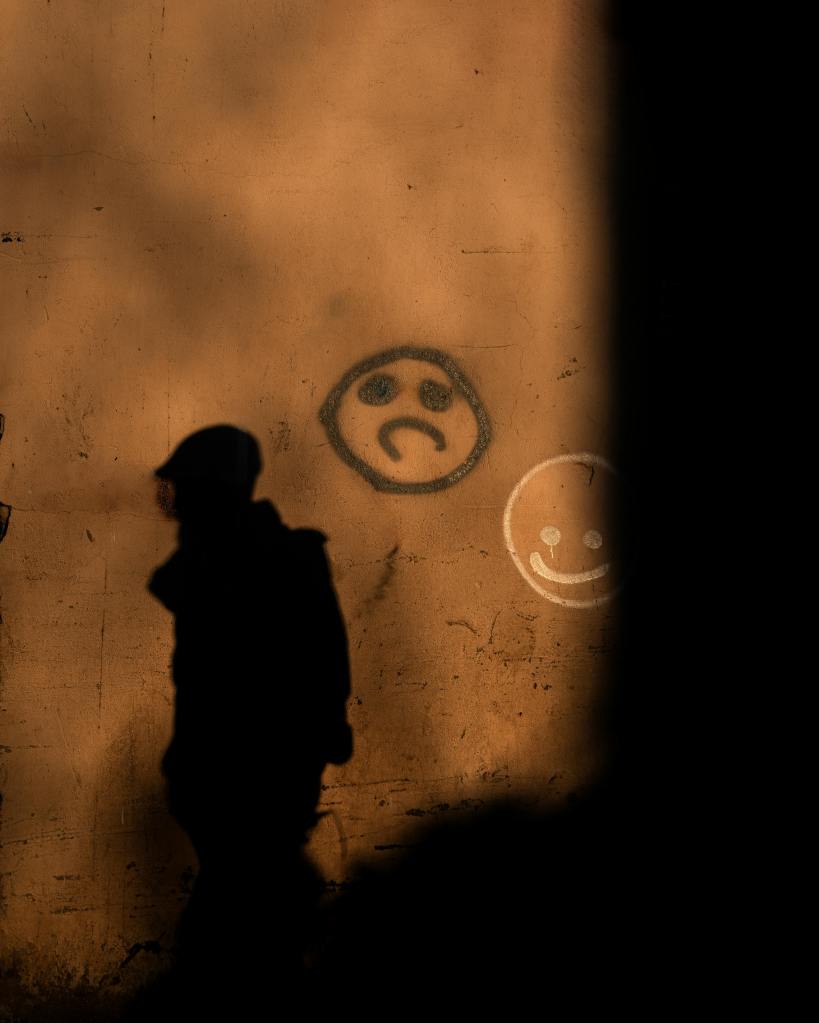
Happy or Right? A Reflection on Atheism and Meaning
Some choices preserve happiness in a moment. Other choices shape the direction of our lives. We know some decisions are important, so we weigh them carefully. Other decisions we make without much thought because we assume they don’t matter. But sometimes, small decisions have outsized consequences. It’s hard to see the difference up front; it’s only in looking back that we recognize the resulting impact.
When I was engaged to my wife, I had a conversation with my stepbrother that was funny at the time but has rung true in many areas of my life. He said that, in the future, when I argue with my wife, I should stop and ask myself if I would rather be happy or right.
I have found myself faced with that exact choice in my work, with my kids, and with my wife. It boils down to a matter of effort. When is it worth inducing discomfort in your own life only to be sure there is accountability to the truth? If I watch my pregnant wife eat the last of the ice cream and then she forgets and accuses me of finishing it myself the next day, I will agree with her. I will choose being happy over being right.
What about punishing your teen child when you catch them sneaking back in the house at 2 a.m.? It would be easier to let the transgression slide and not deal with an irate hormone infused creature, but it is better to weather the short-term storm for the long-term positive impact on the child. I would have to be in the “right” camp here, I could not settle for being “happy”.
Over the years, I’ve realized that Christianity offers something really unique regarding this choice: you don’t have to choose. In Christ, you can be both. You can be anchored in truth and filled with joy. Not a fragile happiness that depends on circumstances, but a deep, rooted peace that holds even when nothing else does.
That’s something atheism can’t offer.
By their own design, atheists must base all their beliefs on human knowledge. This is a system that’s still fumbling through questions we barely understand. We don’t know how consciousness works. We haven’t cracked the origin of life. We constantly publish articles declaring that we’re “close” to some breakthrough, that we’ve “unlocked” the next great truth, that we’re the “masters of our creation.” This is the same source of knowledge (from man) that believed lobotomies were a good solution for mental illnesses.
There are countless examples of the hubris of man. Nuclear bombs, genocides, and horrors too monstrous to imagine. While people may question how God can “allow” those things to happen, that is a thought for another post. What is dangerous right now is that a vast majority of people believe we (as a species) know more than we do. I’ve previously posted about how we still operate in oral traditions, similar to what we did 2,000 years ago. We’re not the masters of what we create, we wind up being ensnared and enslaved to it. Technology outpaces wisdom, comfort replaces conviction, and meaning gets lost in the noise if we let it.
“But, as it is written, ‘What no eye has seen, nor ear heard, nor the heart of man imagined, what God has prepared for those who love him.’” (1 Corinthians 2:9) quoting Isaiah 64:4 “From of old no one has heard or perceived by the ear, no eye has seen a God besides you, who acts for those who wait for him.”
We keep trying to decode the universe, only to discover again and again that we don’t understand it. And worse, we don’t understand ourselves. Our eyes do not see. Our ears do not hear.
That’s why I believe Christianity matters. It shows us how to live in the truth of what we do not understand with joy, with hope, and with humility. Faith doesn’t offer the capability to know everything, but it points us to the One who created everything. I understand why Christians are passionate. C.S. Lewis once said:
“Christianity, if false, is of no importance, and if true, of infinite importance. The only thing it cannot be is moderately important.”
But why, if it’s that simple, do people still choose atheism? It could be rebellion, a desire for personal or moral autonomy, not wanting to change, or 1,000 other reasons. It does no good to guess at other people’s logic.
For Christians, there is no choice. We have certainty in the fact that we are saved because we invited Jesus Christ into our hearts and lives. Believers often claim that they know that God is the truth. Atheists may also say they know that there is no God, but either conclusion is impossible to defend without faith. The most an atheist can say with any intellectual integrity is “maybe, maybe not.” Not “no,” just “maybe.” Otherwise, they are taking the same leap of faith, but without Jesus there to catch them.
I agree 100% that I cannot prove to anyone God exists, the same way I cannot 100% prove I love my wife. I married my wife in front of my friends and family. I was baptized in front of my friends, family, and congregation. Both are public declarations of love, but only God knows my heart. We all know simply saying words or going through a ceremony doesn’t mean much. The divorce rate is about 50% these days. That statistic alone gives people the intellectual space to assume nobody loves their spouse, but we can feel that we do. In that very same way I feel that love my wife, I feel God in my life.
Pascal’s Wager is an idea that many atheists dislike and dismiss as manipulative or lazy. I believe they dismiss it because it’s a devastating argument. It says that if Christianity is true, then it is the most important truth in human history. Eternity is real. Salvation is real. Your soul is eternal. If Christianity is false and I still choose to follow Jesus, I’ve lived a life shaped by love, discipline, forgiveness, purpose, and hope. I’ve lost nothing.
Now let’s flip the argument.
If atheism is true, and there is nothing after this life, then none of this matters. Not your love. Not your pain. Not your legacy. You simply disappear. In this logic, Ecclesiastes 1:2 cries, “Utterly meaningless! Everything is meaningless.”
And if atheism is false, and God is real, then you’ve gambled your entire existence and lost everything for eternity.
If atheism is true, it offers no hope. If it’s false, it offers no rescue. Either way, the one thing it cannot hold is meaning.
Atheism promises nothing and delivers exactly that.
There is one small piece of this argument that I do not like. It suggests that when you follow Jesus, you are still gambling. You cannot follow Jesus and believe you are making any kind of wager. You have seen and felt the truth, and now, you are born again.
I’ll take the side that offers meaning now and hope forever.
The side that doesn’t shift every time human knowledge “updates.”
The side that holds up, even in suffering.
The side that costs me nothing but gives me everything.
The idea of “choosing” happiness may seem silly. It may not seem like one big decision to make. I suggest you reflect on your own life and look at the many small decisions that may have led you away from Christ. It is never too late to change direction and begin a long obedience towards Christ. Choose to be happy and right.
If you have already made that choice, don’t stay on the sidelines. Help spread His love and His Word. Grace and peace be with you all.


 CarlZunker.com
Leave a reply to clubschadenfreude Cancel reply